Why Does Algae Keep Coming Back in My Fish Tank? (UK Guide)
Why does algae keep coming back in your fish tank? Because the root cause — light, nutrients or instability — was never fixed. Here's how to stop it.
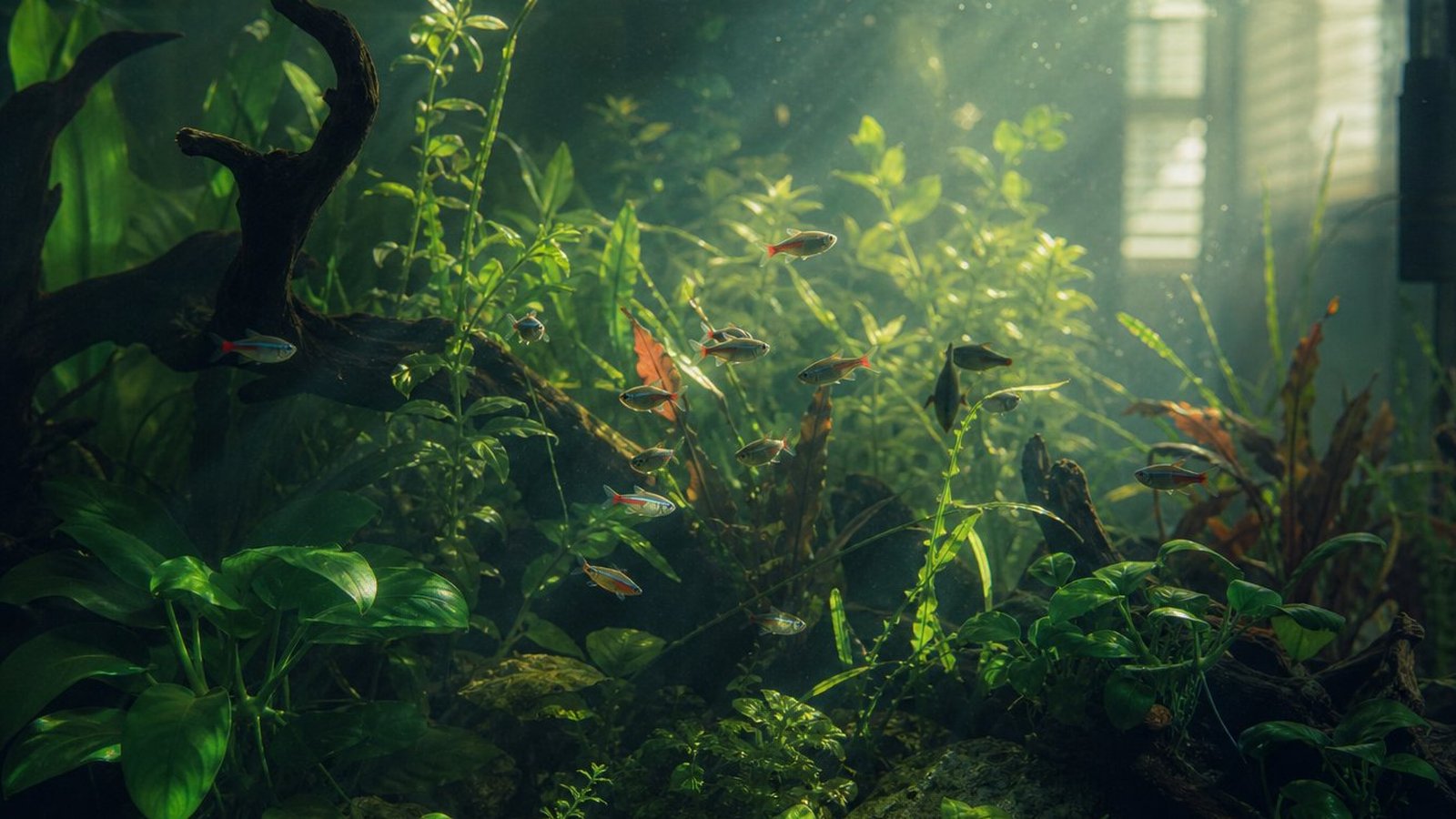
Algae keeps coming back because the underlying cause was never fixed. Scrubbing removes what you can see, but if the light runs too long, nutrients stay high from overfeeding, or conditions swing, spores simply regrow. Correct the root cause — light, nutrients, flow and stability — and it stops returning for good.
It is one of the most disheartening moments in fishkeeping: you spend an afternoon scrubbing the glass and doing a water change, then within a fortnight the green film, brown dust or dark tufts are back. This is not bad luck, and it is almost never something you did while cleaning. As Practical Fishkeeping reminds struggling keepers, algae is usually a symptom of an immature or unbalanced tank rather than anything you did wrong — so cleaning without correcting the conditions that feed it simply guarantees the next outbreak. A thin, stable film on the back glass is normal and harmless in any mature tank; the real problem is algae that coats every surface and returns straight after you remove it.
The real reasons algae keeps returning
Across UK sources like Practical Fishkeeping and the UK Aquatic Plant Society (UKAPS), the same handful of drivers appear again and again. If algae is recurring, at least one of these is still switched on:
- Too much light — usually duration, not just brightness. A photoperiod over eight hours, or a bright planted-spec fixture on a tank with few plants, hands algae more energy than your plants can ever use. Excess light is the single most common trigger, and happily it is also the easiest to correct.
- Excess nutrients from overfeeding or overstocking. Every uneaten flake and every extra fish adds nitrate and phosphate to the water. Overfeeding, overcrowding, skipped water changes and even nitrate-rich tap water all push those levels up, and algae feast on the surplus.
- Unstable CO2 (in planted tanks). UKAPS members repeatedly link stubborn algae such as black beard to swinging or weak CO2 rather than the injection rate itself. When carbon dips partway through the day, plants stall and algae move straight into the gap.
- Poor flow and dead spots. Stagnant corners let detritus settle and let CO2 and nutrients spread unevenly. Aim for enough gentle circulation that every leaf sways slightly — no still zones where waste can gather.
- Inconsistent maintenance. Skipping the odd week, letting the filter clog or leaving decaying leaves in place all let organic waste creep up until algae has the upper hand again.
- Direct sunlight. A tank near a window is a recurring-algae machine. Practical Fishkeeping is blunt: “ensure no sunlight reaches the tank as algae will grow fiercely when exposed to it.” The RSPCA adds that a sunny spot also pushes the water temperature up dangerously.
If you want to match a specific type of algae to its exact cause, work through our algae outbreak rescue plan, which pairs each colour and texture with the right response.
The stability habits that stop it for good
The cure for recurrence is not a harder scrub or a bottle of chemicals — it is stability. Get these four disciplines steady and hold them for four to six weeks, and most tanks quietly stop feeding algae.
1. Fix your photoperiod and put it on a timer. Six to eight hours a day suits most set-ups; drop to six for two or three weeks if you are actively fighting an outbreak. The real fix is consistency, because a plug-in timer stops the gradual “photoperiod creep” toward longer hours that many of us drift into without noticing. Our guide to light hours for a planted tank explains sensible schedules, and the light-schedule calculator gives you a sound starting time for your tank size and plant load.
2. Do a weekly water change. A regular 20–30% change exports nitrate, phosphate and drifting spores before they build up, and this single habit prevents recurrence better than any gadget. Test occasionally, too, and aim to keep nitrate on the low side rather than letting it climb week after week.
3. Grow healthy, fast-growing plants. Plants and algae compete for the same nutrients, so a well-planted tank starves algae out. Stem and floating species — hornwort, water sprite, wisteria or frogbit — are the hungriest and quickest to establish. As Practical Fishkeeping advises keepers who are struggling, add “generous amounts of fast-growing stem plants” that act as nutrient sponges while the tank matures.
4. Hold a steady temperature. Sudden swings stress plants, and stressed plants stop competing — which is exactly when algae recolonises. UK rooms heat up and cool down sharply through the day, so a heater that genuinely holds its set point matters; the RSPCA advises keeping a clean, stable environment and checking the temperature daily with a thermometer. The Hygger Smart Titanium Aquarium Heater controls to ±0.5°C with dual temperature sensors and an external digital controller, keeping plants growing steadily rather than lurching between warm afternoons and cold nights. As an honest measure rather than a marketing figure: the difference between a tight thermostat and a worn dial unit is whole degrees of daily wander, and wandering conditions are precisely the stress window that lets algae recolonise — steadiness is the anti-algae feature nobody photographs.
What if your tank is still new?
If your aquarium is under about two to three months old, recurring algae may simply be a young tank finding its feet. Interpet describes “new tank syndrome” as the first two to twelve weeks while the filter matures, and the ammonia spikes during this window are a classic algae trigger. The answer is patience plus the habits above: plant densely from the start, keep up frequent water changes, and feed lightly. As the biology settles and the plants take hold, the blooms fade on their own.
When algae is a sign of something else
Algae itself will not harm your fish, but a heavy, stubborn outbreak points to water conditions that are less than ideal. If your fish also look unwell — clamped fins, gasping at the surface or going off their food — treat it as a water-quality problem first, and ask an experienced fishkeeper or an aquatic vet before reaching for any chemical treatment. Fixing the root cause is always safer than masking the symptom.
Frequently asked questions
Why does algae come back so fast after I clean the tank? Because cleaning only removes the visible growth, not the conditions that created it. If the light is still too long, nutrients are still high or the tank still catches sunlight, spores regrow within days. Change the conditions, not just the glass.
How long until algae stops returning? Once you correct light, feeding and maintenance and hold them steady, expect clear improvement within one to two weeks and a genuinely stable tank in roughly four to six. Recovery is gradual because it depends on your plants strengthening enough to outcompete the algae.
Do I need chemicals or an algae eater to stop it coming back? No. Chemicals and clean-up crews such as Amano shrimp or nerite snails help manage what is already there, but they cannot fix an imbalance. Sort out light, nutrients and stability first, and biological help then keeps the tank tidy rather than fighting a losing battle.