How to Clean a Filter Without Killing Bacteria: the Golden Rule
Learn how to clean your filter without killing bacteria: rinse media in old tank water, never the tap, and stagger changes to avoid a mini-cycle.
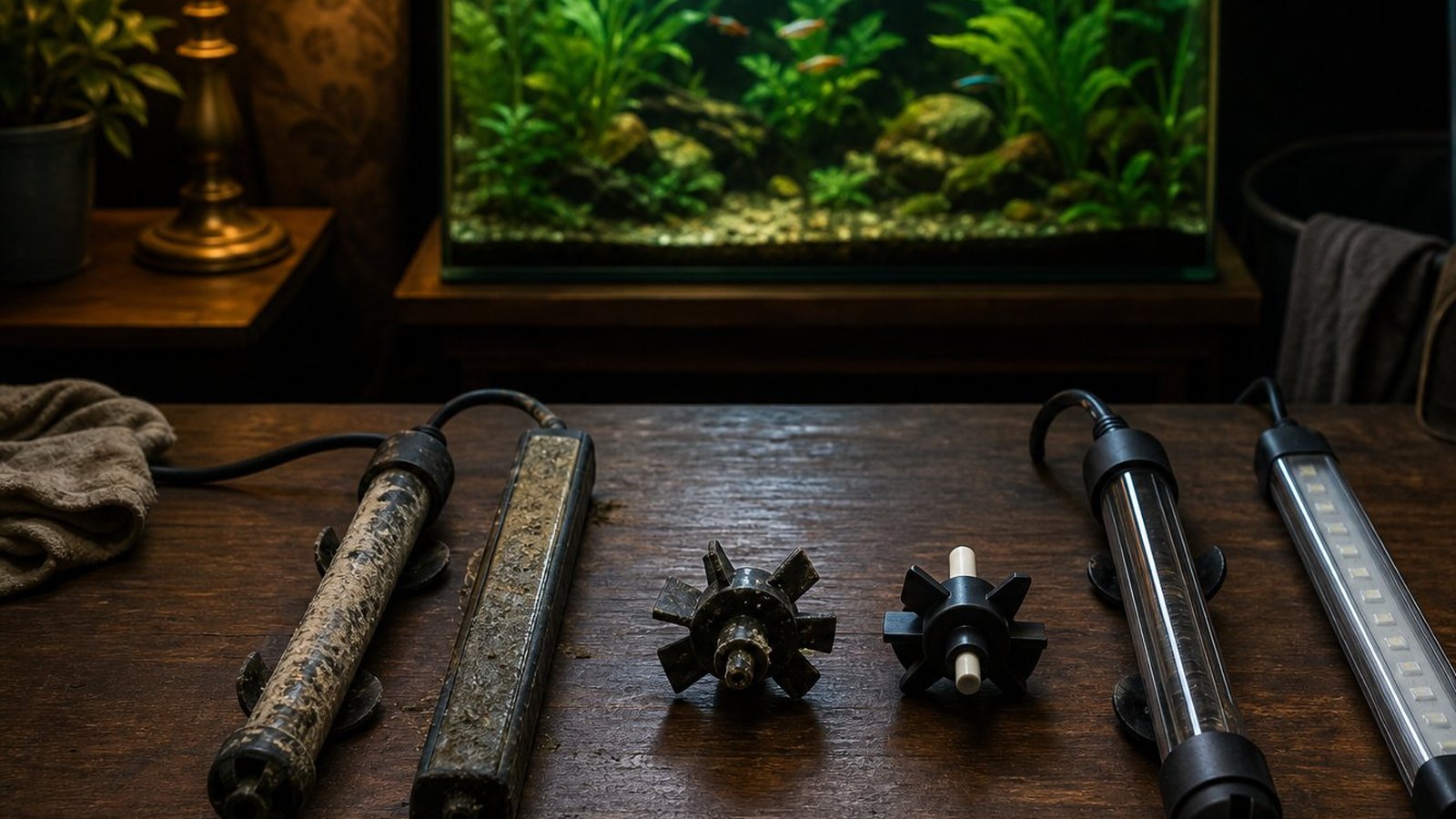
To clean a filter without killing bacteria, rinse the sponges in a bucket of old tank water siphoned off during a water change — never under the tap, as chlorine and chloramine destroy nitrifying bacteria. Clean only the mechanical media, leave the biological media alone, and never renew every part at once.
The golden rule: rinse in old tank water, never the tap
Your filter does two jobs at once: the sponge sieves out debris, and — far more importantly — it houses the nitrifying bacteria that turn toxic ammonia into nitrite and then nitrate. Those bacteria live as a biofilm on the media, not floating in the water. UK tap water is dosed with chlorine or chloramine specifically to kill bacteria, so rinsing media straight under the tap can wipe out the colony that keeps your fish alive. As Practical Fishkeeping bluntly puts it, you should often “completely ignore the instructions” that tell you to wash a sponge under the tap.
Instead, time your filter clean to coincide with a water change. Siphon some water out of the tank into a clean bucket, then swish and gently squeeze the media in that. Because it is the same dechlorinated, temperature-matched water your fish already live in, the bacteria survive. The water will turn brown — that is exactly what you want; you are removing gunk, not sterilising the sponge.
One honest nuance for the curious: lab work discussed by Aquarium Science suggests a brief 15–30 second rinse is far less deadly than the hobby fears, because chloramine takes well over an hour to harm nitrifiers at tap concentrations. The bigger cause of “I killed my cycle” stories is over-cleaning — scrubbing media too hard, too often. Even so, old tank water costs nothing and removes all doubt, so it stays the sensible default.
Which media to rinse, and which to leave alone
Not all filter media is equal, and the biggest beginner mistake is treating it as if it were. Match your handling to the job each material does:
| Media type | Its job | How to service it |
|---|---|---|
| Mechanical (foam, filter wool, floss pads) | Traps physical debris | Rinse often in old tank water; replace only when falling apart |
| Biological (ceramic rings, bio-balls, mature sponge) | Homes your nitrifying bacteria | Swish gently and rarely; keep it as long as possible |
| Chemical (activated carbon, resins) | Adsorbs dissolved compounds | Replace on schedule — it genuinely gets used up |
The rule of thumb: mechanical media clogs fastest and can be rinsed freely, biological media should be disturbed as little as possible, and chemical media is the one category you replace rather than clean. Ceramic rings and a mature sponge can keep working for years, so resist the urge to make them look new. For a fuller picture of how long sponges, media and other kit realistically last, see our guide to aquarium equipment lifespans.
How to clean your filter without killing bacteria: step by step
- Do it during a water change. Siphon 20–30% of the tank into a clean, fish-only bucket so you have plenty of old water to work in.
- Switch the filter off and open it up. Unplug it first for safety, and never leave a canister or internal filter running dry.
- Rinse the mechanical media only. Swish and squeeze the foam or wool in the bucket of tank water until flow is restored — a few squeezes, not a hard scrub.
- Leave the biological media almost alone. If ceramic media looks sludged, give it one gentle swish in the same bucket; otherwise, do not touch it.
- Wipe the impeller and housing. Remove the impeller carefully (the ceramic shaft is fragile) and clear any grime, as thinkfish advises, to stop the filter failing early.
- Reassemble and restart. Tip the dirty bucket down the drain — not back into the tank — top up with dechlorinated water, and check the flow has returned.
How often to clean — and how to stagger media changes
There is no fixed calendar. Clean when the flow visibly drops, which for many UK tanks is roughly monthly. Thinkfish offers the best self-check: if the media looks fairly clean each time, you are cleaning too often; if it is caked in sludge, clean more frequently. A filter needs to get a little dirty to work well.
Replacing media is where cycles crash. Never renew everything at once — new media is sterile, and swapping it all removes your whole bacterial colony in one move. Stagger it instead:
- Replace only one type of media per session.
- When biological media must go, swap about half and leave the rest for a month or more.
- If you run a single foam block, cut it in half and replace one half at a time.
- Run new media alongside old for a few weeks so bacteria can colonise it first.
Leave the new piece in for at least a month before swapping the rest — nitrifying bacteria colonise new media over weeks rather than days, which is exactly why the staggered swap works.
Signs you have over-cleaned your filter
If you scrub too hard or rinse under the tap, the tank slips back toward new tank syndrome — a “mini-cycle” where the bacteria can no longer keep up. Watch for:
- An ammonia or nitrite spike on your test kit, often one to three days after cleaning.
- Cloudy, milky water — a bacterial bloom as the colony re-establishes.
- Stressed fish: gasping at the surface, clamped fins or loss of colour.
If you see these, test the water, do a 25–50% water change, ease off feeding for a few days, and consider adding a bottled bacteria starter. Retest daily until ammonia and nitrite sit at zero. If fish look genuinely distressed, act quickly and ask an experienced fishkeeper or an aquatic vet rather than waiting it out.
Warmth also helps the colony recover, because nitrifying bacteria slow right down in cool water. A stable, accurate heater such as the Hygger Smart Titanium Aquarium Heater — accurate to ±0.5°C with dual temperature sensors — holds a steady temperature so your bacteria keep working while the filter settles back in.
Frequently asked questions
Can I rinse my filter sponge under the tap just once? It is best not to. UK tap water contains chlorine or chloramine, and while a very brief rinse is less catastrophic than often claimed, old tank water removes all risk for no extra cost. Keep a bucket of siphoned tank water beside you and use that instead.
How do I clean a filter without restarting the cycle? Rinse only the mechanical media in old tank water, leave the biological media untouched, and never replace all the media at once. Doing all three keeps enough bacteria in place that the tank barely notices the clean.
Should I clean the filter and gravel on the same day? Ideally not. Both hold beneficial bacteria, so servicing them together removes too much colony at once. Space the jobs out by a week or two to keep your biological filtration stable.