Aquarium Lighting for Floating Plants: Balance Surface Cover and Light Below
Direct buyer answer
Effective aquarium lighting for floating plants means giving the surface mat enough light to grow while leaving clear lanes or thinner patches so plants underneath still receive usable light—without treating any single cover percentage as a universal rule. Fixture height, intensity and schedule all change how much light reaches the canopy and the mid-water below, so balance plant mass with light rather than chasing a fixed shade target.
How surface cover changes distribution
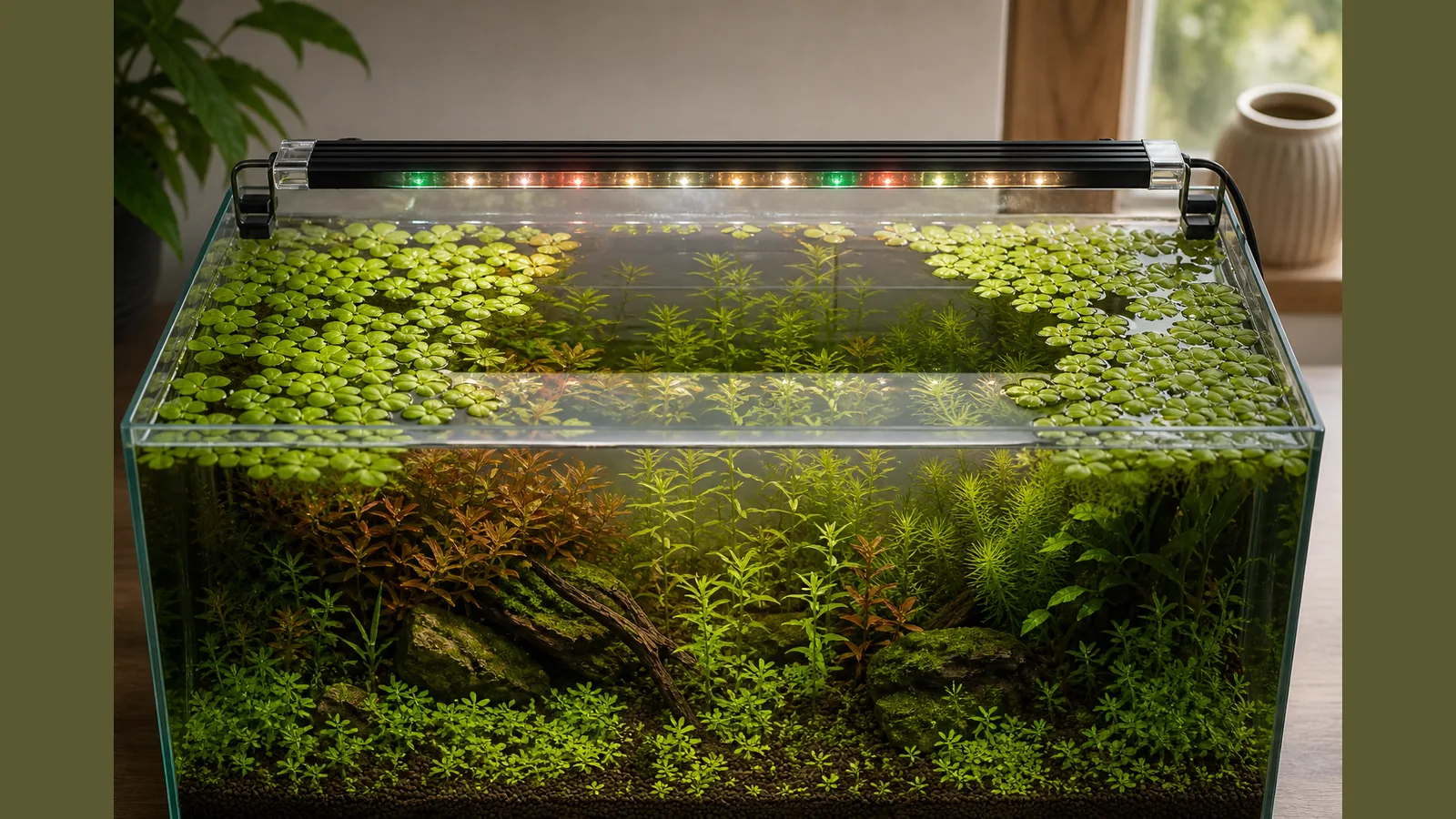
Floating leaves intercept light before it travels deeper. As cover spreads, more light is used at the surface and less reaches stems and carpet plants below. Plant light needs vary, and both fixture height and intensity affect what actually arrives at plant level, which is why the same lamp can feel bright above frogbit or salvinia yet muted further down.
Dense mats also reduce how evenly light spreads across the tank. Open water corridors and gaps between rafts matter more than trying to force light through a continuous carpet—penetration through dense cover should not be assumed.
Floating plants and plants below
Floating plants add living plant mass at the top of the water column. That extra mass can help with nutrient uptake and shade management, but only when plant mass and light stay in balance; imbalance is a common factor in algae problems in planted aquariums.
Use floating cover as a soft diffuser for mid- and background plants that prefer gentler light, and keep clearer zones above higher-demand species. An LED light for floating aquarium plants should support both the surface layer and whatever is rooted beneath it—not one at the expense of the other.
Coverage checklist
- Estimate how much of the water surface is currently covered, then note open lanes rather than aiming for one fixed percentage.
- Check which submerged plants sit under frogbit, salvinia or similar mats and which sit under clear water.
- Confirm the fixture sits at a height that lights both the floaters and the open zones without inventing intensity targets you cannot measure.
- Keep a simple timer schedule so day length stays consistent while plants settle.
- Review algae, leaf colour and new growth together—not light alone—before changing cover or photoperiod.
Position and schedule decisions
Raise or lower the fixture only within the maker’s mounting guidance so floaters get enough light without bleaching open patches. If submerged plants look starved while floaters thrive, widen gaps in the mat or thin the raft before assuming you need a brighter lamp.
Start conservatively while plants establish and verify that the timer is actually running as set. A steady photoperiod is easier to judge than frequent on-the-fly changes. Lighting under frogbit and salvinia improves most when schedule, height and surface gaps are adjusted together.
When a corral helps
A simple floating-plant corral—airline tubing, a ring or a gentle barrier—keeps rafts in one area so filter outflow and surface agitation do not push cover over every plant. Corralling is a placement tool, not a guarantee of deeper light; it mainly protects clear lanes you have chosen for light-hungry plants below.
Revisit the corral after maintenance or water changes, because disturbed floaters quickly re-spread and erase those lanes.
Signs to adjust
- Submerged plants stretch, pale or stall while floaters thicken into a near-complete mat.
- Open zones look harsh or algae-prone while shaded areas stay dull—rebalance cover and schedule rather than relying on lighting alone for fish or plant health.
- Growth slows after you added more floaters without changing height or day length.
- The timer drifts or skips days; restore a reliable schedule before changing hardware.
Soft product next step
For a 50–60 cm tank, consider a full-spectrum RGB fixture with a display timer controller so you can keep a steady day length while you tune floating cover. The GAKO GK160-45 25W full-spectrum RGB LED aquarium light with display timer controller is sized for that range and is sold with a 12-month warranty on this site; beam angle, PAR maps and waterproof ratings are not stated here, so judge fit by tank length and your surface-cover plan.
Review the current product details for the 50–60 cm timer LED light if you want a practical next step after setting coverage and schedule.
FAQ
Is there a best surface-cover percentage for floating plants?
No universal percentage applies. Aim for enough cover to shade where you want softer light and enough open water for plants that need more, then adjust from growth and algae cues.
Will brighter light pierce a dense frogbit or salvinia mat?
Do not assume reliable penetration through dense cover. Thin or corral the mat and keep clear lanes instead of relying on intensity alone.
Can aquarium lighting alone protect fish health under floating plants?
No. Lighting is only one part of the system; avoid health guarantees based on lighting alone and watch water quality, stocking and plant balance as well.
What should I change first—cover, height or schedule?
Usually open or thin the surface cover and confirm timer operation, then adjust fixture height if submerged plants still look underserved. Conservative lighting while plants establish remains a sound default.