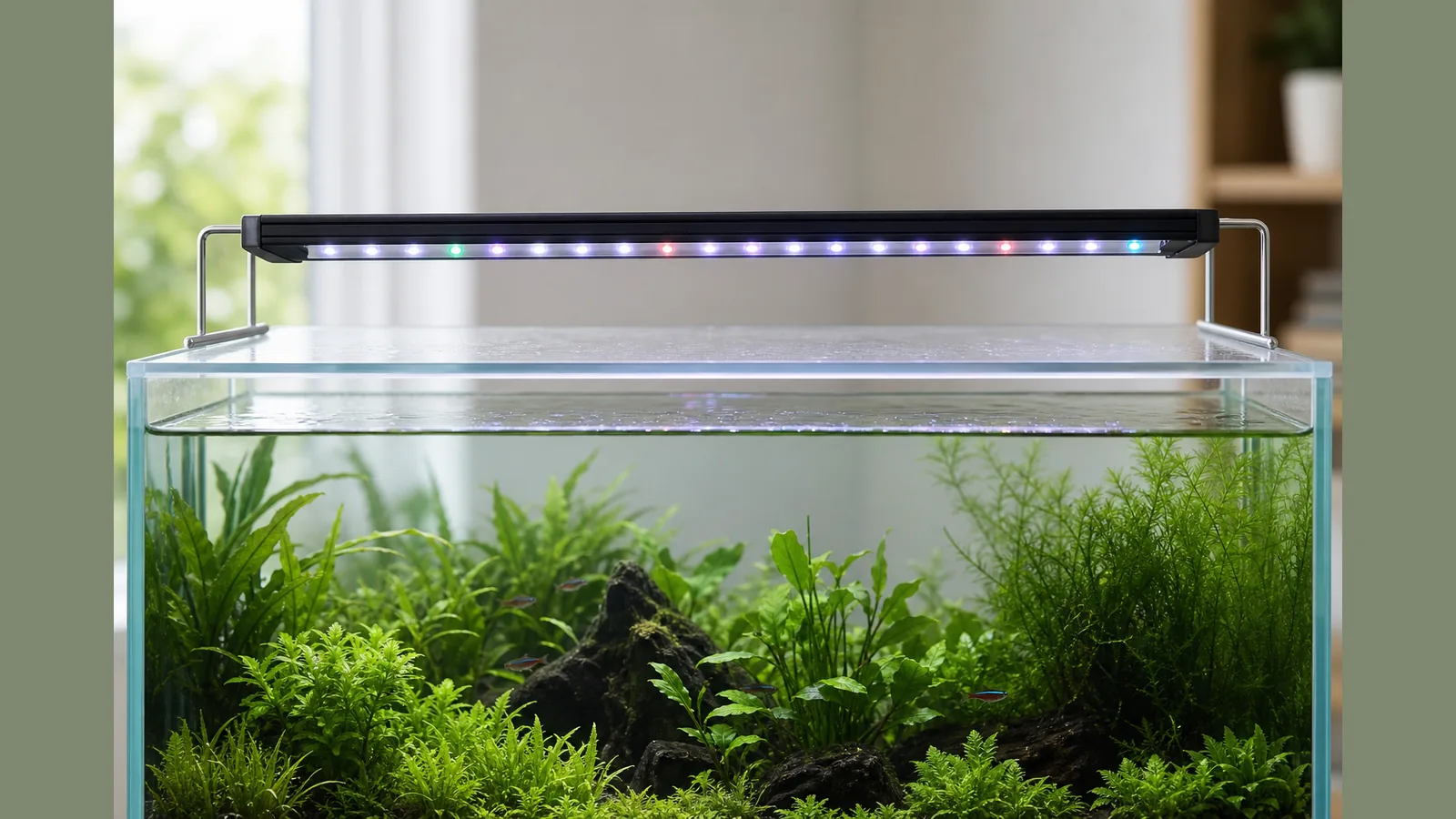
Using an aquarium led light under a glass lid: fit, condensation and cleaning checks
Direct answer
An aquarium led light under a glass lid can work when the fixture fits the tank length, mounting and cable routing stay clear of the glass, and you clean deposits safely with the power isolated—without assuming the light is waterproof or resting it on the lid unless the maker’s instructions say so. Fixture height and how light reaches the plants both matter when you judge planted-aquarium lighting, so treat the lid as part of the light path rather than an afterthought.
Measure tank and lid
Start with a tape measure, not a guess. Note the external tank length and the clear opening under any glass cover, rim or hood. For a 50–60 cm aquarium size class, confirm that the chosen light’s intended span matches that range before you order or remount anything.
Also note lid thickness, hinge gaps and any raised trim that could foul brackets or the lamp body. Leave room for condensation drip lines and for lifting the glass for feeding and maintenance. Do not quantify how much light a lid “blocks” without a proper test; simply record whether the cover is clear, tinted or often fogged so you can judge plant response later.
Check mounting and cable route
Mounting must follow the product instructions. Bracket span and how far the lamp sits above the water are practical fit checks; treat any waterproof ratings as unverified unless the maker states them clearly for each part.
- Confirm brackets or clips grip the tank rim as directed, not an improvised perch on the glass.
- Route the cable so it does not pinch in a hinge, sit in standing water on the cover, or pull the fixture off centre.
- Keep controllers and plugs away from splash zones and condensation run-off.
- Do not assume the unit may rest directly on a lid unless final instructions allow that placement.
Deposits and viewing
Glass lids collect mineral film, biofilm and condensation droplets that dull colour and make the scape harder to read. Wipe the underside when it is safe to do so, and check that the lamp face itself is free of dust or spray residue that would further soften the light.
If viewing looks dimmer after fitting a cover, compare clear days with fogged days before changing photoperiod or intensity. Effective delivery depends on height and intervening surfaces as much as on the lamp label, which is why planted-tank lighting guides stress placement as well as wattage class.
Safe cleaning ladder
Regular maintenance and balanced light help keep planted aquariums stable, including algae prevention. Use a simple ladder so cleaning never becomes a live-electrical risk:
- Switch off and unplug the light; isolate power at the socket.
- Allow surfaces to cool and dry enough to handle safely.
- Lift or open the lid only as far as the hinge and cable allow without strain.
- Clean glass with aquarium-safe methods; avoid abrasives that scratch covers.
- Dry contacts and the cable path before restoring power.
Never imply the fixture is waterproof. If any part looks cracked, swollen or wet inside, stop and seek guidance rather than wiping around live connections.
Observe plant response
Judge plants over an establishment period, not overnight. New growth, internodal spacing and algae film over one to several weeks tell you more than a single evening glance after fitting a lid.
Keep notes on photoperiod, how often the cover stays closed, and cleaning frequency. If algae rises while plants stall, review light hours and nutrient balance together—maintenance and light balance belong in the same routine, not as separate afterthoughts.
When to ask the manufacturer
Contact the maker when instructions are missing or conflict with what you see in the box, including mounting on or under glass, cable strain relief, or which parts may see moisture. Ask before improvising a lid-mounted setup, before assuming splash protection, and whenever UK plug or adapter details are unclear for your installation.
Independent product pages on this site use a 12-month warranty for goods sold here; start and claim rules beyond that headline period still follow the retailer’s published policy, so use confirmed details coverage details when you write to support.
Soft product next step
If you are matching a full-spectrum RGB LED with a display timer controller to a 50–60 cm tank and need to confirm size class and mounting notes against a glass cover, review the current product details for the GAKO GK160-45 aquarium light before you buy or remount.
FAQ
Will a glass lid stop my aquarium LED working?
No—lids mainly change fit, condensation and how much light reaches the plants. Keep mounting per instructions and watch plant response over time rather than expecting an instant verdict.
Can I rest the light on the glass cover?
Only if the manufacturer’s final instructions allow it. Otherwise use the specified brackets or mounts and keep the cable clear of hinges and pooled water.
How do I clean under the lid safely?
Isolate power first, then clean glass and accessible lamp surfaces once cool. Do not treat the fitting as waterproof, and restore power only when cable paths are dry.
What tank length is the GK160-45 aimed at?
That model is intended for 50–60 cm aquariums. Measure your tank and lid opening, and ignore conflicting size or wattage call-outs that belong to other variants.