How to acclimatise aquarium plants to brighter led light: how to Acclimatise Aquarium Plants to a Brighter LED Without Changing Everything at Once
Direct answer
To acclimatise aquarium plants to brighter LED light, treat the change as a tank-wide balance issue: keep CO2, nutrients and maintenance steady, start from a conservative lighting duration, then alter only one lighting variable at a time while you watch new growth and algae over roughly two weeks. Lighting alone cannot promise algae prevention, so a gradual approach reduces the risk of pushing the system out of balance.
Why plant and algae response can diverge
Plants and algae do not always respond to the same light increase in the same way. UK planted-aquarium guidance links light demand with plant choice, CO2, nutrients and maintenance, and warns against excessive light. Algae risk often reflects an imbalance between light, CO2, nutrients and how mature the system is, rather than brightness alone. If you raise light while the rest of the routine stays unchanged, plants may need time to catch up while opportunistic algae can respond first.
That is why a brighter LED is best introduced as a controlled adjustment, not an overnight reset of the whole aquascape.
Set a baseline
Before you increase intensity or hours, note what the tank is already doing. Record:
- Current daily lighting duration and when the light turns on and off
- Which plants look settled, sparse or newly planted
- Any existing algae on glass, substrate or leaves
- Your usual CO2 approach (if used), fertiliser routine and water-change habit
Newly planted aquariums need time to establish, and UK planting guidance recommends a conservative initial lighting duration. If you have only just replanted or moved plants under a new fixture, favour stability first. Keep species expectations modest: match light demand to the plants you actually keep, rather than assuming every stem or carpet will tolerate a sudden rise.
Change one lighting variable
Once the baseline is clear, change only one lighting variable. Practical options include:
- Extending the photoperiod by a short, fixed amount
- Raising intensity slightly, if your controller allows stepped control
- Keeping duration and intensity the same while you confirm the new fixture is timed consistently
Use confirmed details a product-specific ramp schedule beyond what you can observe in your own tank. Leave CO2, fertiliser and maintenance unchanged during this first step so you can tell whether the lighting change itself is helping or stressing the system. If your fixture includes a display timer controller, use it to keep on/off times repeatable rather than adjusting by guesswork each day.
Observe new growth and algae
After the single change, watch plant tips and algae together. Useful signs include:
- Fresh leaf or tip growth without melting that worsens week on week
- Colour and density that hold or improve on established plants
- Algae that stays stable, slows, or increases on glass, hardscape or older leaves
If plants look stalled while algae accelerates, treat that as an imbalance signal. Return to the idea that light, CO2, nutrients and system maturity work together; do not keep raising light in the hope that more brightness alone will correct the picture.
Two-week log
A simple two-week log is enough for most home tanks. Each day or every few days, note:
- Lighting duration and any intensity setting you changed
- New growth on a few marker plants
- Where algae appears and whether it is spreading
- Whether maintenance stayed the same
Review the log at the end of the fortnight before making a second lighting change. If growth is steady and algae is not escalating, you may consider another small single-variable step. If the tank looks moving, pause and stabilise rather than stacking further increases.
When to step back
Step back if you see rapid algae spread, worsening melt on newly planted stock, or a clear mismatch between brighter light and the rest of your routine. In those cases:
- Return toward the previous duration or intensity setting
- Keep CO2, nutrients and cleaning consistent while the tank settles
- Allow newly planted areas more time before another lighting increase
Remember the risk guardrail: lighting alone cannot promise algae prevention. A temporary step back is often healthier than forcing a brighter schedule the plants and system are not ready for.
Soft product next step
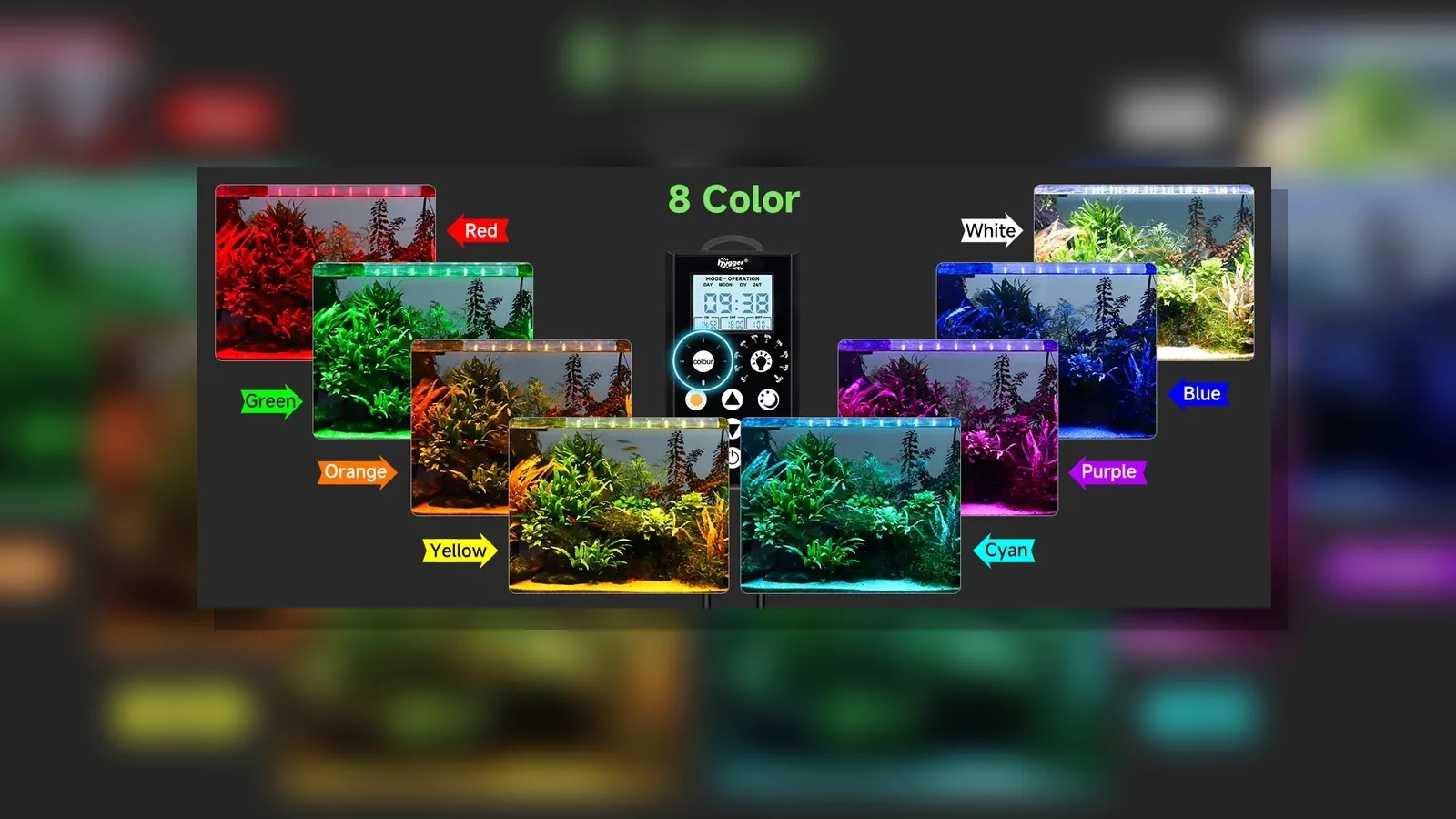
If you are choosing a brighter fixture for a mid-size planted tank, look for controllable timing so you can keep changes deliberate. The GAKO GK160-45 25W full-spectrum RGB LED aquarium light with display timer controller for 50–60 cm tanks is aimed at that size range and includes timer control that can support a measured acclimatisation routine. Products sold on this site carry a 12-month warranty; start and coverage details beyond that period are not expanded here.
FAQ
Can I raise light hours and intensity on the same day?
It is safer to change one lighting variable at a time. Changing both at once makes it harder to see whether plants are adapting or whether algae is responding to excess light relative to CO2, nutrients and maintenance.
How long should a new planted tank stay on a conservative schedule?
Newly planted aquariums need time to establish, and UK guidance favours a conservative initial lighting duration. Use your two-week log and plant response, not a fixed promise, to decide when a modest increase is appropriate.
Will a brighter LED stop algae by itself?
No. Algae risk reflects imbalance across light, CO2, nutrients and system maturity. A brighter LED should be introduced gradually and judged alongside the rest of the planted-tank routine.
What if my plants look fine but glass algae increases?
Treat rising algae as a reason to pause further increases, review duration or intensity, and keep maintenance steady. Excess light relative to the wider balance is a recognised concern in planted-aquarium lighting guidance.